Featured

How must firms manage Brexit

Since June 2016, Brexit has been the main topic of conversation, in public or around the dinner table. However, many do not know the impact Brexit will have on UK businesses. In this article, I will explain why neoclassical realism is the best way to manage new issues arising from the Brexit referendum.

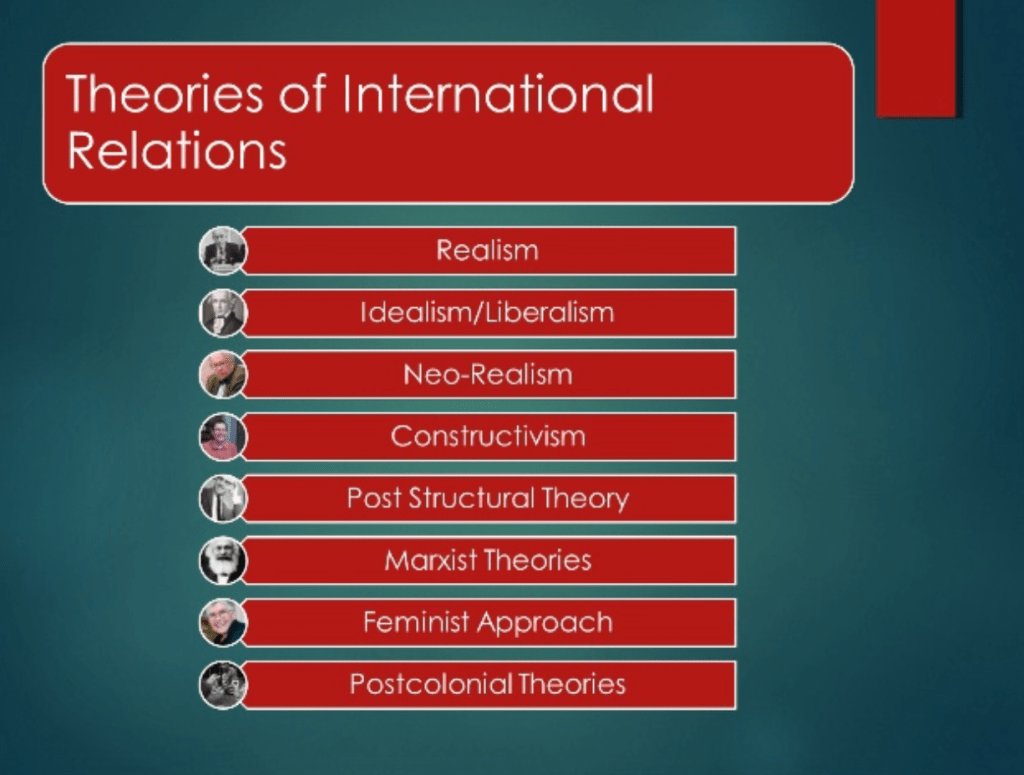
In light of Brexit businesses in the UK, must choose which management theory they must use. 
Neoclassical Realism
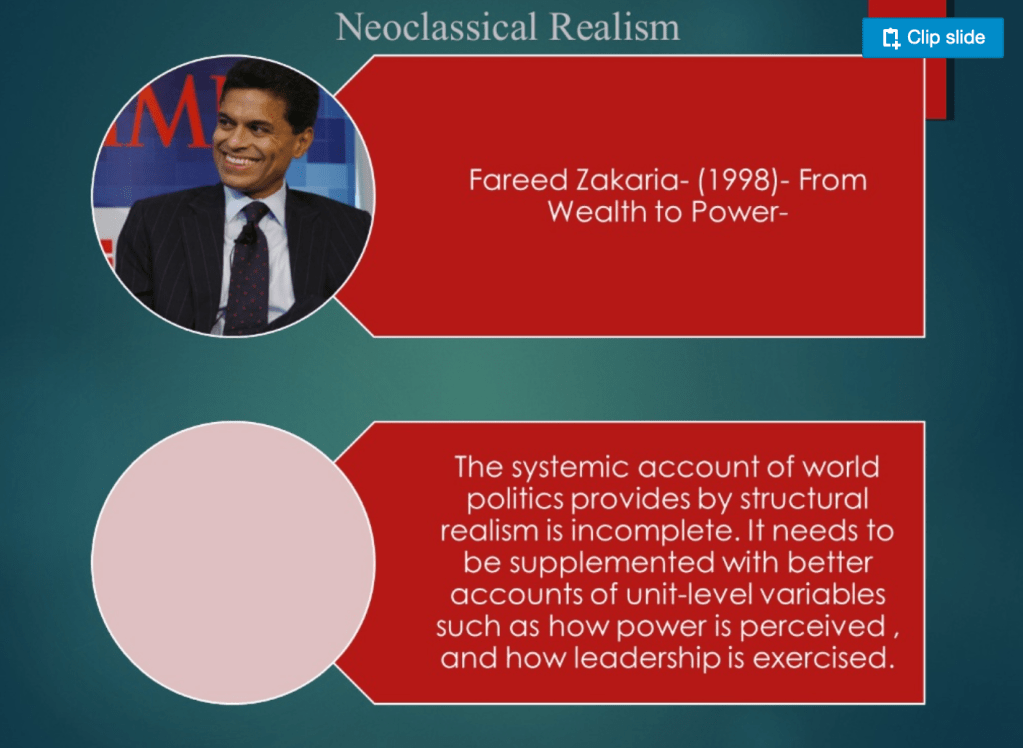
  • Neoclassicists see trade and relations between countries as a divide of power around the global market.
  • Realists decide on precise calculated and rational choices to maximise return for their party. And, since Brexit, the UK slice of that power has dramatically reduced, the EU economy now completely outdoes the UK’ but nearly $10.0 trillion
  • However, this realistic approach is the one most suited to Brexit, and The study of Britan’s relations showed that a realist approach it best. Providing a realist apporach is best.

Constructivism 

  •  This theory works with social convention and norms made by politicians around the world. This theory differs from realism, as it does not look at material wealth and power it focuses on image and respect.
  • As good as this sounds, however, constructivism is not an excellent way to approach issues raised by Brexit. To understand Brexit on a constructivist would have to know where the UK and all other EU states stand in terms of international image. Showing that constructivism is inferor to realism.

Bureaucratic Politics 

This theory focuses on:

– Policy both foreign and domestic.
– In terms of Brexit, the focus is debates, compromises and politics. 

Cognitivism 

Where constructivism focuses on belfies and ideas, cognitive centres on:

  • psychology
  • decision, for the individual

Conclusion

Overall all of these theories are very effective and deal with the problem of Brexit in their own unique way. However, where Cognitivsm, Bureartic and Constructivism, aim the tackle Brexit in a more complicated, Realism takes the situation as it is and takes action depending on fact or figure. Surely is making this the best theory to use as it will be the harsh push we need to keep Britan on track.
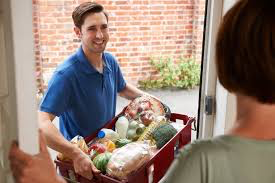

A dynamic workforce.

During this period of the national lockdown, the country has faced many challenges. However, the overriding dilemma is sadly, unemployment. A combination of a drop-off in migrant workers from Eastern Europe together with local workers being sick or self-isolating means a gap will appear.

One of the most significant sectors impacted by the virus is the grocery and supermarket sector. As I’m sure, you have noticed as I have, that supermarkets have been extremely busy with very little to no available slots for weeks. This is due to a massive fall in available staff, due to the temporarily displaced workforce moving to a new sector. However, considering the 9 million furloughed workers, there have been record numbers of people applying for fruit and vegetable grower jobs around the country. ‘Totaljobs says it has seen 50,000 searches for farming jobs in the past week alone’.

This increase is due to the sizable surplus in labour, thanks to millions being furloughed, rising unemployment and students also available for work. A modern-day ‘land army’ has been introduced calling for recruitment to help deliver millions of tonnes of fruit and vegetables to supermarkets and those in need as not to let them go to waste. The 70,000 workers needed to replaced seasonal migrants, has been filled comfortably and there are much more waiting. This sudden change in the market has caused a considerable amount of unrest and uncertainty for managers and CEO, making it hard for them to plan and prepare for the future while to present is so fluid. Thus putting stress in the governing bodies of these organisations.

This come together attitude the country’s work fore has shown a clear indicator of the countries resilience and positive attitude, not to let this virus destroy the country. And with the recent news of the Prime Minister being taken into intensive care, the country does need to pull together as a unit to fight and contain this virus.

How has Corona Virus impacted BA

Corona Virus has been ragging across the globe in recent months, causing a near standstill in some countries, with others in complete lockdown. The threat the world faces is unlike any she has faced before, the enemy can’t be seen, can not be negotiated with and as far as we know can not be stopped. This situation is presenting firms with a new, unforeseeable challenge and firms have been suffering even airline giants British Airways.

As stated by BA it’s self and publicised on multiple FT articles, the airliner was preparing for what was predicted to be the most profitable year of the firm history, however, COVID-19 stepped in and now they are faced with near travel standstill and are reaching for every lifeline available.
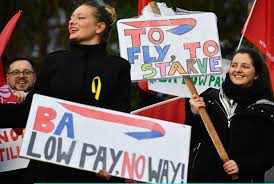
” A combination of international flight bans, national lockdowns and passenger concerns about the coronavirus has created the biggest crisis in modern aviation history. In response, British Airways is to suspend 36,00 employees”. British Airways said this in a recent media release. They also said that around 16,500 employees would lose more than 20 per cent of their income, along with 4,000 pilots going on unpaid leave, and the very few that have negotiated temporary pay cuts they will be receiving approximately half of the normal incomes. Which as shown in one of the other pilots strikes below, didn’t go down to well.

However, unlike other Airline companies such as Easyjet, BA have not seest all flights and they have continuing to fly. Thus showing the class and destructive power of this virus on the whole economy because if it is able to bring a firm worth £ 14 billion, to its knees just think what it will do to other smaller ones. But nevertheless, thanks to this virus hundreds of thousands of people around the world have been pushed out of jobs and for many that have put them in very dire situations.

The Effect of Brexit on rural businesses and their economy.

As many people may not know rural businesses make up a considerable per cent of firms within the UK, nearly 25% as of 2014/15. Many other these businesses consist of agricultural farming, arable farming, forestry and fishing. Tourism is also seen in this sector, however in a much smaller capacity. Many of the public, however, will not see any relevance between agriculture and Brexit. Well, that is my job.

CAP the Common Agricultural Policy put in place by the EU is a funding system. This policy is one of the biggest the EU has making up nearly 40% of its expenditure. The policy provides rural programmes, support measures and even direct payments to farmers in Europe. As perfect as this sounds, UK farmers will soon be forced to do business without this considerable aid. Thanks to Brexit CAP will no longer apply to the UK. Putting vast amounts of pressure on UK farmers, especially considering in 2016, 72% of the UK’s food and drink exports were to the EU. 

However, it isn’t all bad news for the farmers of the UK. The UK government have said that they would provide a new agricultural policy in 2020 so that this sector is not crippled. However, it is clear to see that the impact of Brexit on agriculture and rural businesses is substantial and will be felt by most of the population in ways many of us will not notice or understand. 

It is difficult to tell what impacts Brexit will have on tourism and other rural businesses, but it is fair to say that the effect will not be a good one and severe management methods and day to day running of firms will change. And we will see whether the UK government will include then in the new agricultural policy or if a new policy is needed to combat this issue.

Corona and a cold one.

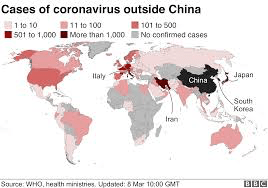
In the last few months, there has been a worldwide outbreak of a deadly virus known as the Corona Virus or Covid-19. The virus was first detected in China, and since then it has spread to nearly 90 locations globally, including the US and Europe. So it is fair to say this presumably unstoppable virus is cause for great concern. I’m going to focus on the coincidental relationship between this horror and the cold beer, so many enjoy.

Thanks to the sudden coercion and fear of the virus, many people are wrongly correlating these feelings to the established beer brand. America is a clear example of this attitude in an article written by Al Root; he states that talk show hosts and US media have been discussing the fact that nearly 38% of Americans wouldn’t buy Corona beer under any circumstances. After, Corona published a statement showing that the firm’s sales have risen by 5% in the US in the past year. This then contradicts national surveys, so it begs the question, how are sales up?

Writer David Mikkelson wrote an article based on this fact, and he found that the world’s largest brewing giant, which is behind Corona, Stella Artois and Budweiser predicted a fall by 10% of earnings due to the fall in demand in China—resulting in the firm’s shares falling by 8%. AB InBev estimated that loses of up to £221 million where seen in the first two months of 2020. So clearly the virus is impacted the beer market.

Since the emergence of the virus to the UK, however, it is not uncommon to see empty supermarket shelves excluding to odd Brussel sprout and strangely Corona beer. So how have sales increased when cleary sales have fallen? That is a question I leave to you, the readers.

Introduce Yourself (Example Post)

This is an example post, originally published as part of Blogging University. Enroll in one of our ten programs, and start your blog right.

You’re going to publish a post today. Don’t worry about how your blog looks. Don’t worry if you haven’t given it a name yet, or you’re feeling overwhelmed. Just click the “New Post” button, and tell us why you’re here.

Why do this?

  • Because it gives new readers context. What are you about? Why should they read your blog?
  • Because it will help you focus you own ideas about your blog and what you’d like to do with it.

The post can be short or long, a personal intro to your life or a bloggy mission statement, a manifesto for the future or a simple outline of your the types of things you hope to publish.

To help you get started, here are a few questions:

  • Why are you blogging publicly, rather than keeping a personal journal?
  • What topics do you think you’ll write about?
  • Who would you love to connect with via your blog?
  • If you blog successfully throughout the next year, what would you hope to have accomplished?

You’re not locked into any of this; one of the wonderful things about blogs is how they constantly evolve as we learn, grow, and interact with one another — but it’s good to know where and why you started, and articulating your goals may just give you a few other post ideas.

Can’t think how to get started? Just write the first thing that pops into your head. Anne Lamott, author of a book on writing we love, says that you need to give yourself permission to write a “crappy first draft”. Anne makes a great point — just start writing, and worry about editing it later.

When you’re ready to publish, give your post three to five tags that describe your blog’s focus — writing, photography, fiction, parenting, food, cars, movies, sports, whatever. These tags will help others who care about your topics find you in the Reader. Make sure one of the tags is “zerotohero,” so other new bloggers can find you, too.

Design a site like this with WordPress.com
Get started